04 Multi-robot research build in progress 2026
Swarm Robotics Fleet
Electromagnet-coupled robots with calibrated PWM drive
Three ESP32 robots built to dock, latch and move as one payload using downward-facing electromagnets with flyback protection. PWM was tuned per-wheel against a straight-line reference until the fleet tracked true, and an ArUco-marker + dashboard planner is being built to choreograph dock-and-carry sequences.
- Role
- Sole hardware & firmware engineer
- Stack
- ESP32 ×3 · L298N · Logic-level MOSFETs · Buck converters · Python
- Headline
- 3: Robots · electromagnetic docking
Three ESP32 robots built to dock, latch and move as one payload. Each robot carries a downward-facing electromagnet; to move an object heavier than any one of them, the swarm docks around it, energises its magnets, and drives in formation. It is the simplest mechanical answer to "what if the thing is heavier than the robot": no grippers, no arms, just coupling.
- Fleet
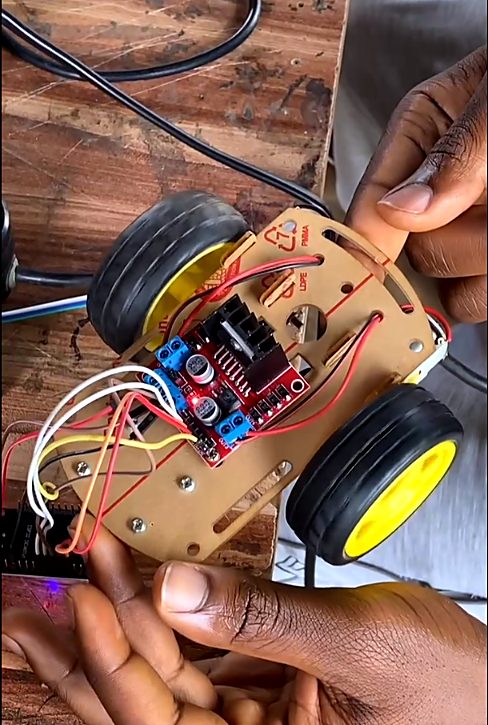
- 3 × ESP32 robots, independent drive electronics per unit
- Drive
- L298N dual H-bridges, logic-level MOSFETs switching the electromagnets
- Power
- Buck converters stepping the pack down per unit: one regulator per robot, not one shared rail
- Coordination
- Python-side path planning against ArUco markers (in progress)
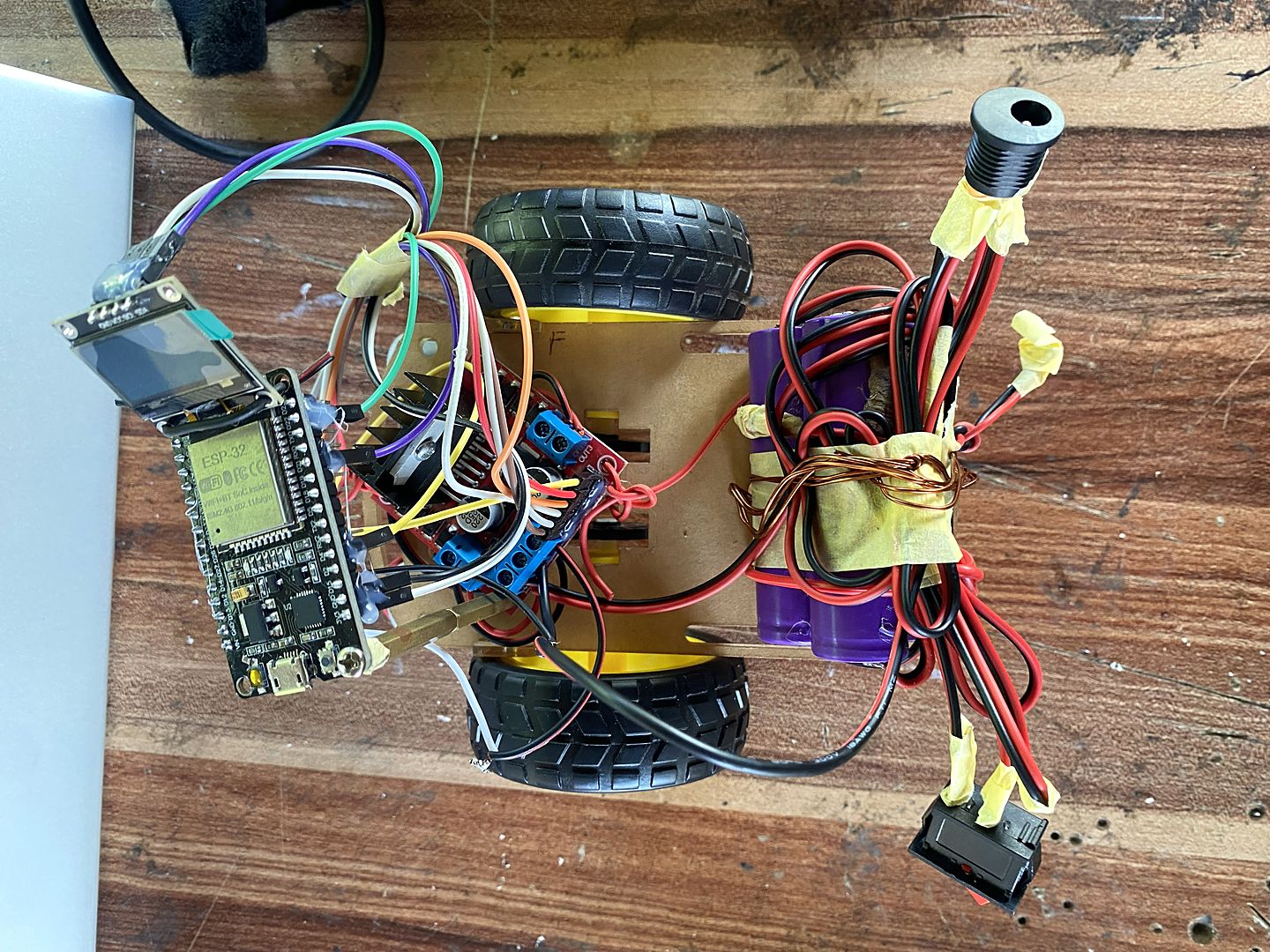
The electromagnet is the interesting actuator precisely because it is a hostile load: a bare coil driven by a MOSFET fights every switch-off with a flyback spike that will kill an unprotected transistor in a week.
- Flyback protection on every coil. Freewheeling diodes across each electromagnet give the collapse current somewhere to go; the drivers survived the whole campaign of dock/latch/release cycles.
- Logic-level MOSFETs as the coil switches. The ESP32's 3.3 V GPIO drives the gates directly, no gate-driver stage, because the parts were chosen for VGS(th) and RDS(on) at 3.3 V, not grabbed from a drawer.
- Buck converters per unit. Motors and coils share nothing electrical with a neighbour: one robot browning out cannot take the formation with it.
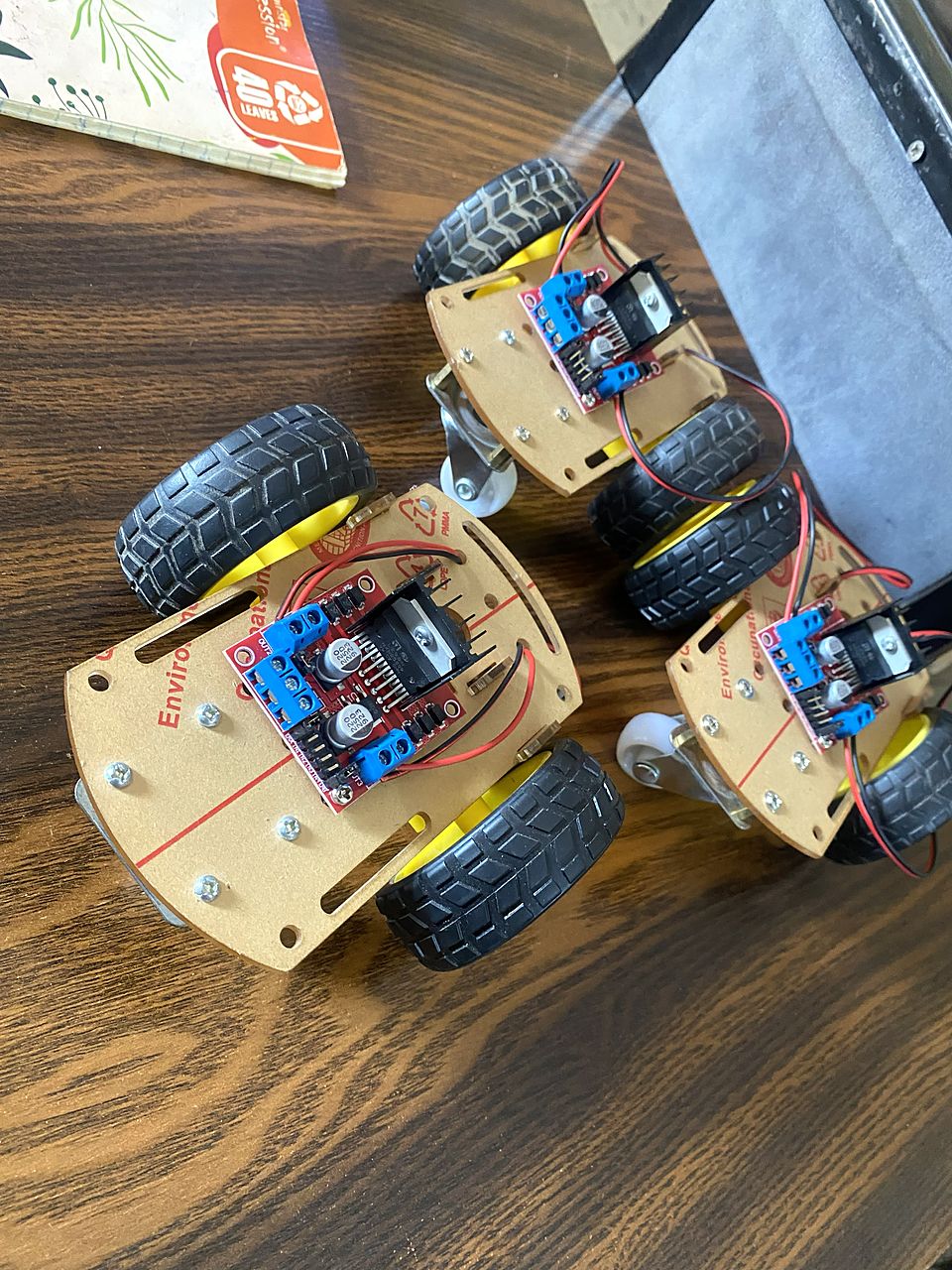
Cheap gearmotors differ. Give three robots the same PWM duty and you get three different speeds and three gentle curves, which is fatal for a fleet that has to arrive at a dock together. So calibration came before choreography.
Method
Each robot ran straight-line trials at fixed duty, the drift was measured, and per-wheel PWM compensation was tuned against a marked reference line until each robot tracked true. The fleet's heading error dropped to the point where docking alignment became a mechanical concern instead of an electrical one.
It is the least glamorous work on this page and some of the most transferable: measure the component, not the datasheet's version of it.
The upper layer, where the swarm decides, is being built: a Python dashboard that watches the arena through a camera, reads ArUco markers, and plans dock-and-carry sequences.
- Markers
- 3 payload markers + 3 destination markers: nine unique IDs across the fleet and the arena, so every robot knows which payload is its assignment.
- Planner
- Dashboard-driven path planning in Python: camera → marker poses → assignment → per-robot waypoints.
- State
- Robots dock, latch and drive as a formation; coordinated payload transport under the planner is the part still being finished.
Straight answer
This build is not finished. The drive calibration, the magnet switching and the docking mechanics work on the bench; the marker-driven choreography is the open chapter. I would rather show the honest state than quietly retire the project. The lab page records both what works and what does not yet.
3
Robots built, each with independent drive + magnet electronics
±straight
Per-wheel PWM calibration against a marked line
9
Unique ArUco IDs across payload and destination markers
open
Planner-driven formation transport, the chapter in progress
What stands: three working robots, protected electromagnetic coupling, calibrated formation driving. What remains: closing the loop from dashboard plan to dock-and-carry.
— end of case study —