02 Hackathon · NASCOMSOFT TEAM RAMP built · demo 2026
AttendX
Smart biometric attendance management system · TEAM RAMP
A smart biometric attendance management system on an ESP32-S3-CAM: SFM-V1.7 capacitive fingerprint module, 16×2 LCD, 4×4 keypad, and a 3D-printed enclosure. PIN clock-ins trigger an automatic camera snapshot so proxy attendance leaves evidence. TEAM RAMP took 1st place overall at the NASCOMSOFT EMBEDED Hackathon 2.0.
- Role
- Product manager & hardware engineer
- Stack
- ESP32-S3-CAM · SFM-V1.7 · LCD 16×2 · 4×4 keypad · C++
- Headline
- 1st: Overall · TEAM RAMP grand finale
AttendX is a smart biometric attendance management system, built for the NASCOMSOFT EMBEDED Hackathon 2.0 over five weeks as TEAM RAMP, a four-person team. I ran product and worked on the hardware. The idea: clock in with a finger instead of a signature, and make sure nobody can clock in for somebody else.
- Team
- 4 people; I handled product management and hardware engineering
- Timeline
- 5 weeks (Aug – Oct 2026), grand finale 10 October 2026
- Core parts
- ESP32-S3-CAM · SFM-V1.7 capacitive fingerprint module · 16×2 I²C LCD · 4×4 keypad · 3D-printed enclosure
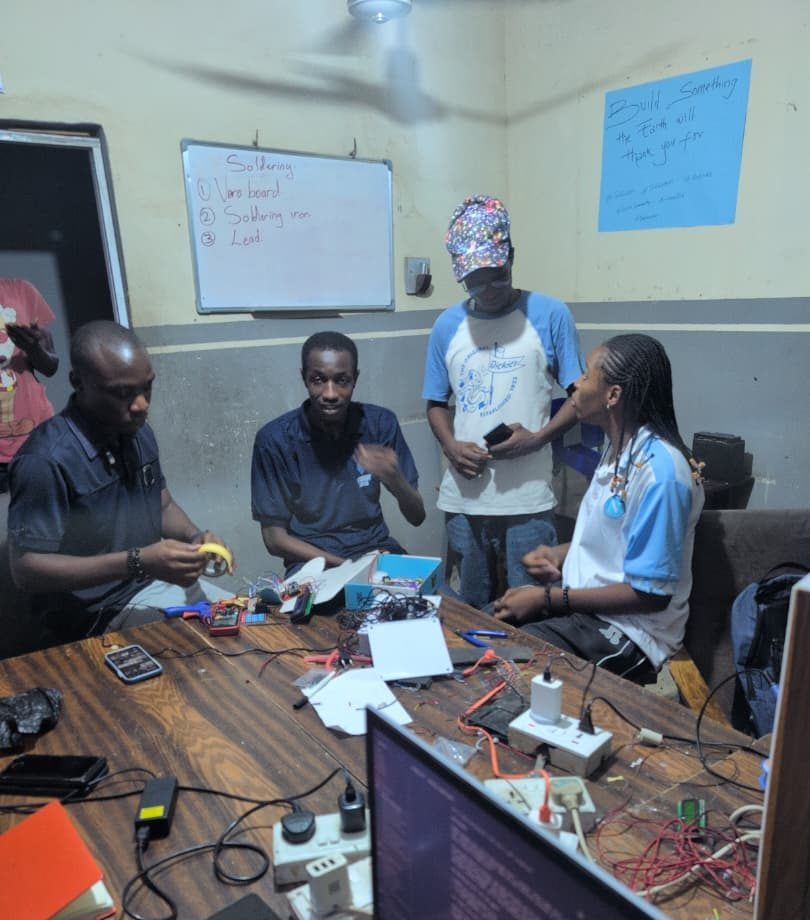
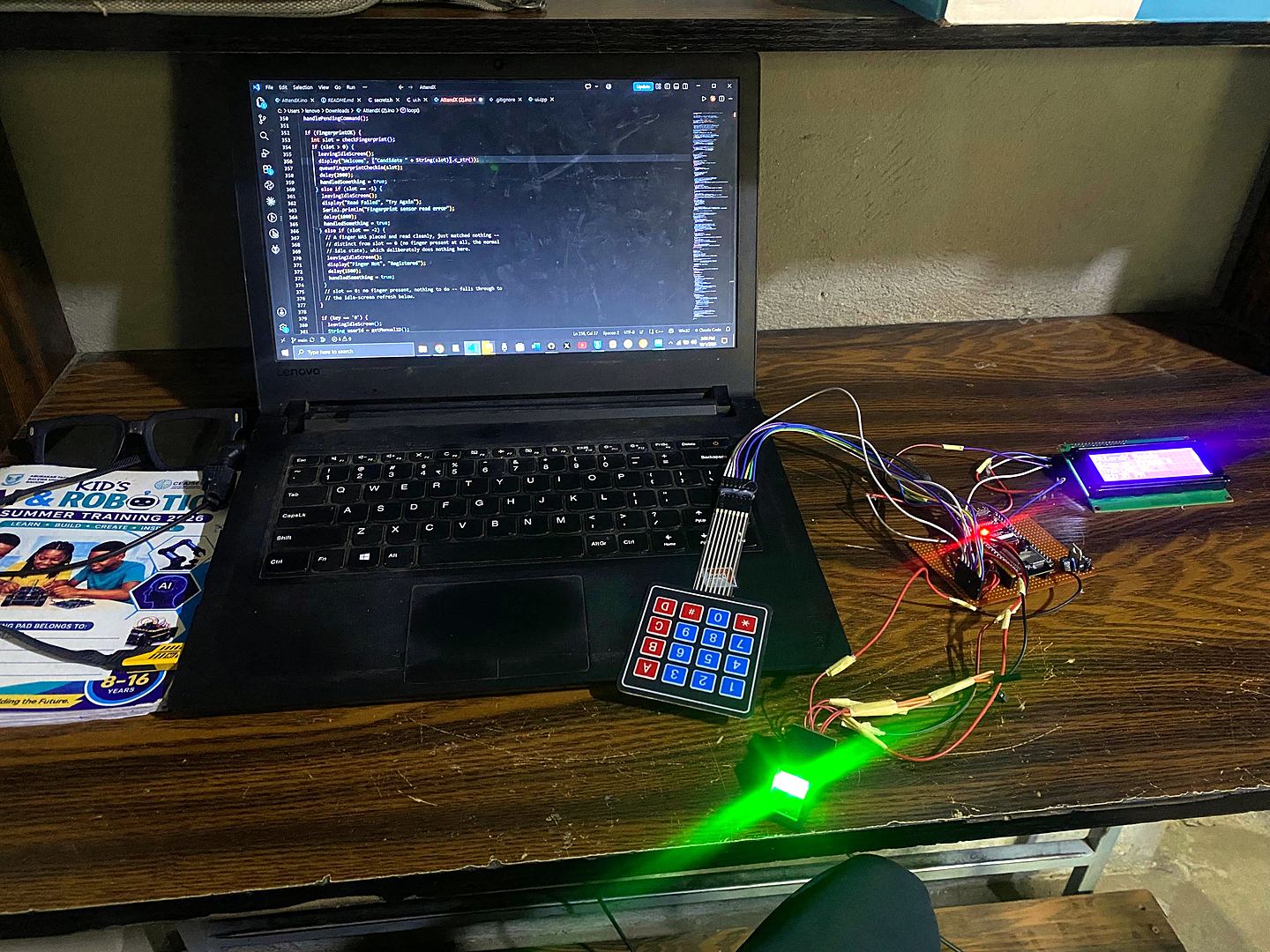
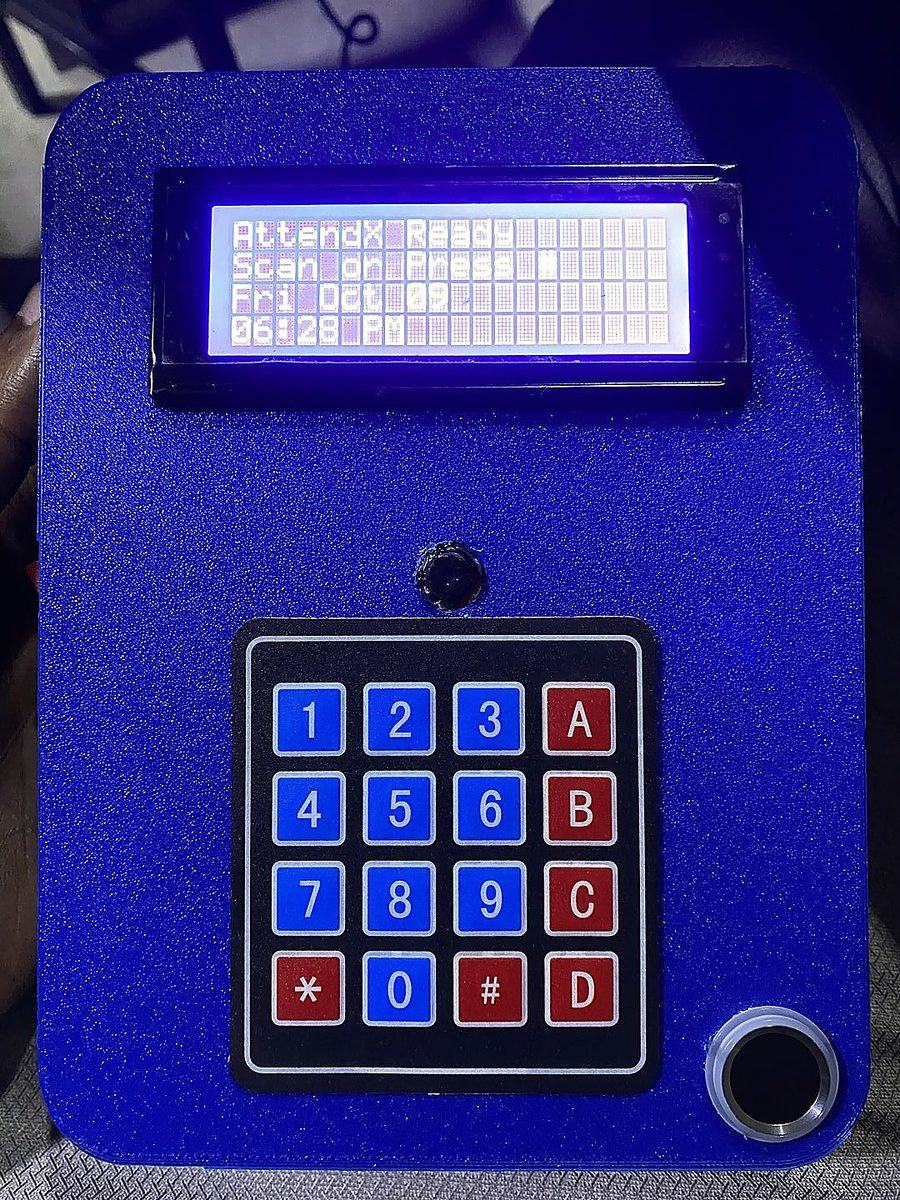
The terminal walks a member through one interaction: identify on the LCD, present a finger or a PIN, get a verdict in the time it takes to put a hand down. Everything on the bench was wired and tested before the enclosure was designed around it.
- Enrolment and matching on-module. The SFM-V1.7 capacitive sensor keeps templates inside the module itself, so the terminal works with no network and no database to lose.
- Two clock-in paths. Fingerprint for the honest path; a 4×4 keypad PIN as the fallback for a damaged or bandaged finger. The fallback path is where the interesting engineering ended up.
- A visible, auditable state machine. The 16×2 LCD mirrors the terminal's state at every step: waiting → identifying → matched/rejected → logged, so a failure is never silent.
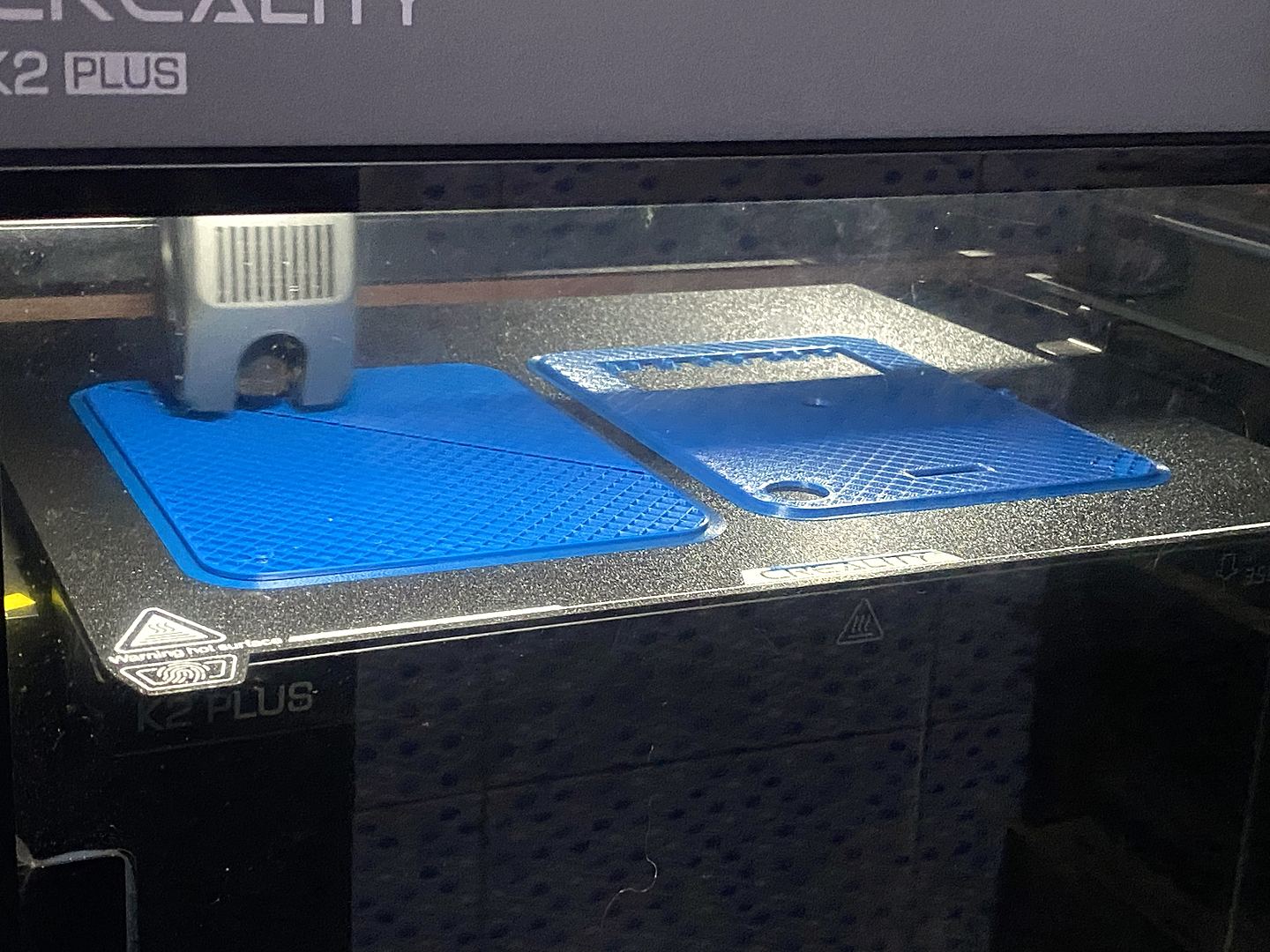
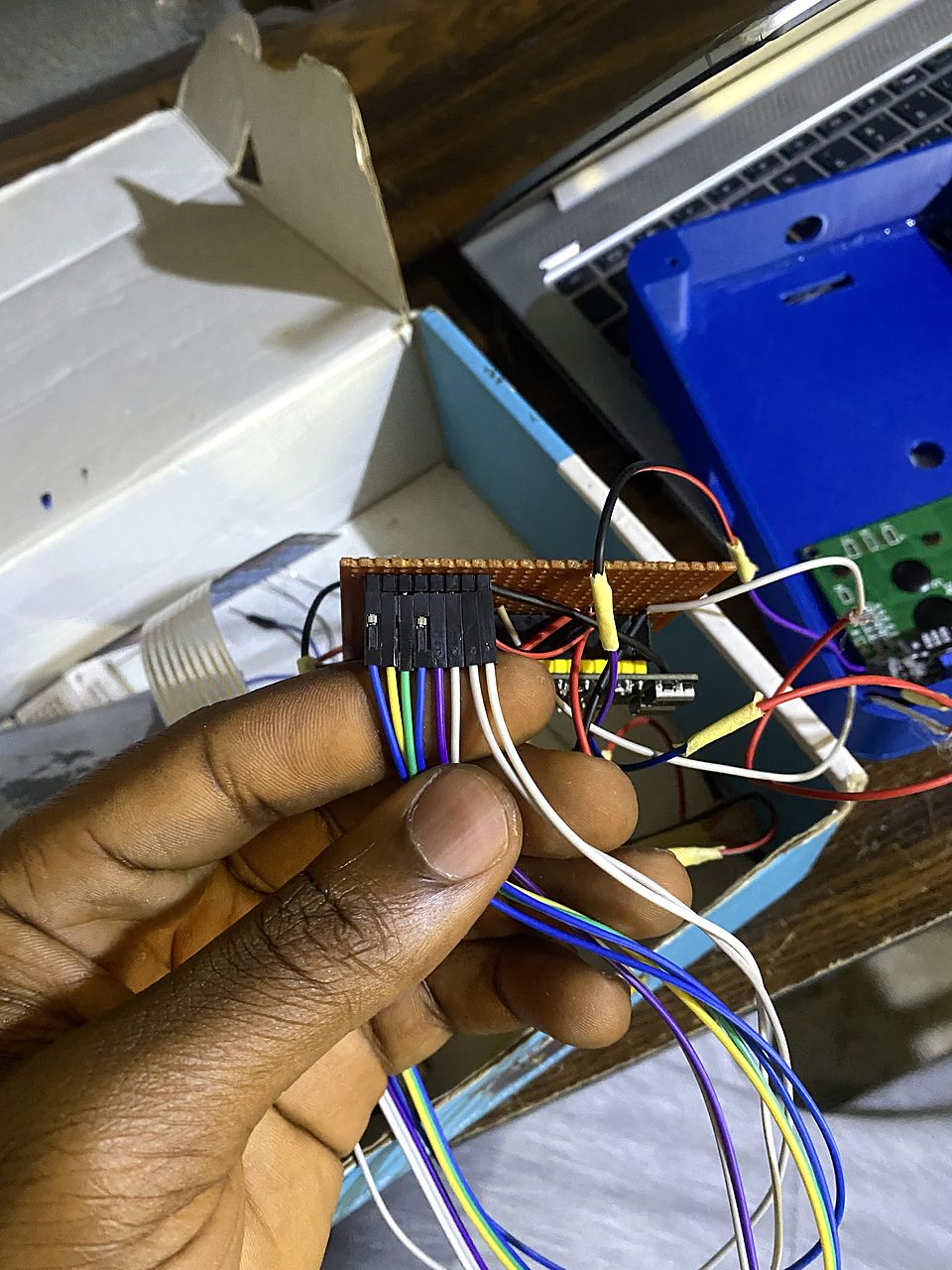
- Enclosure measured from the real loom. The camera, sensor, LCD and keypad live in a 3D-printed enclosure that was measured from the actual wiring loom, not from the schematic.
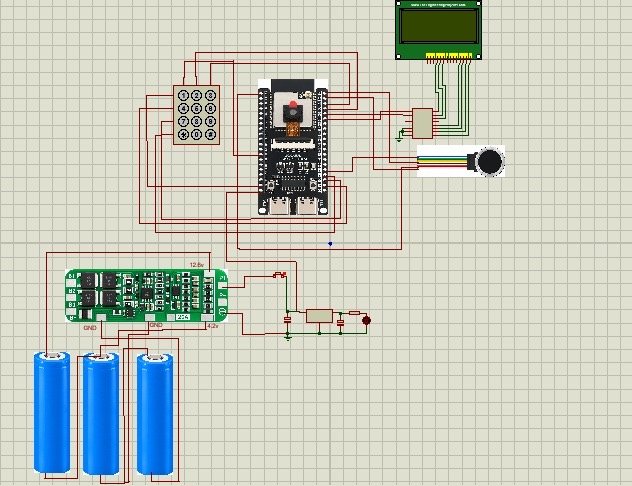
Every attendance system has a hole, and ours was obvious: the keypad PIN path. A friend with your PIN can clock you in from a car park. Removing the PIN would have punished everyone with a genuine fingerprint problem, so instead the fallback stops being anonymous.
Design decision
The moment an employee clocks in by keypad PIN instead of fingerprint, the ESP32-S3-CAM fires an automatic camera snapshot and attaches it to that log entry. The PIN path still works for the person it was built for, but proxy attendance now leaves a face next to the record.
It is the cheapest possible anti-spoofing: no extra sensor, no model to run, one wire of logic between "PIN accepted" and "camera captures". Designing the hole to close itself was the part judges remembered.
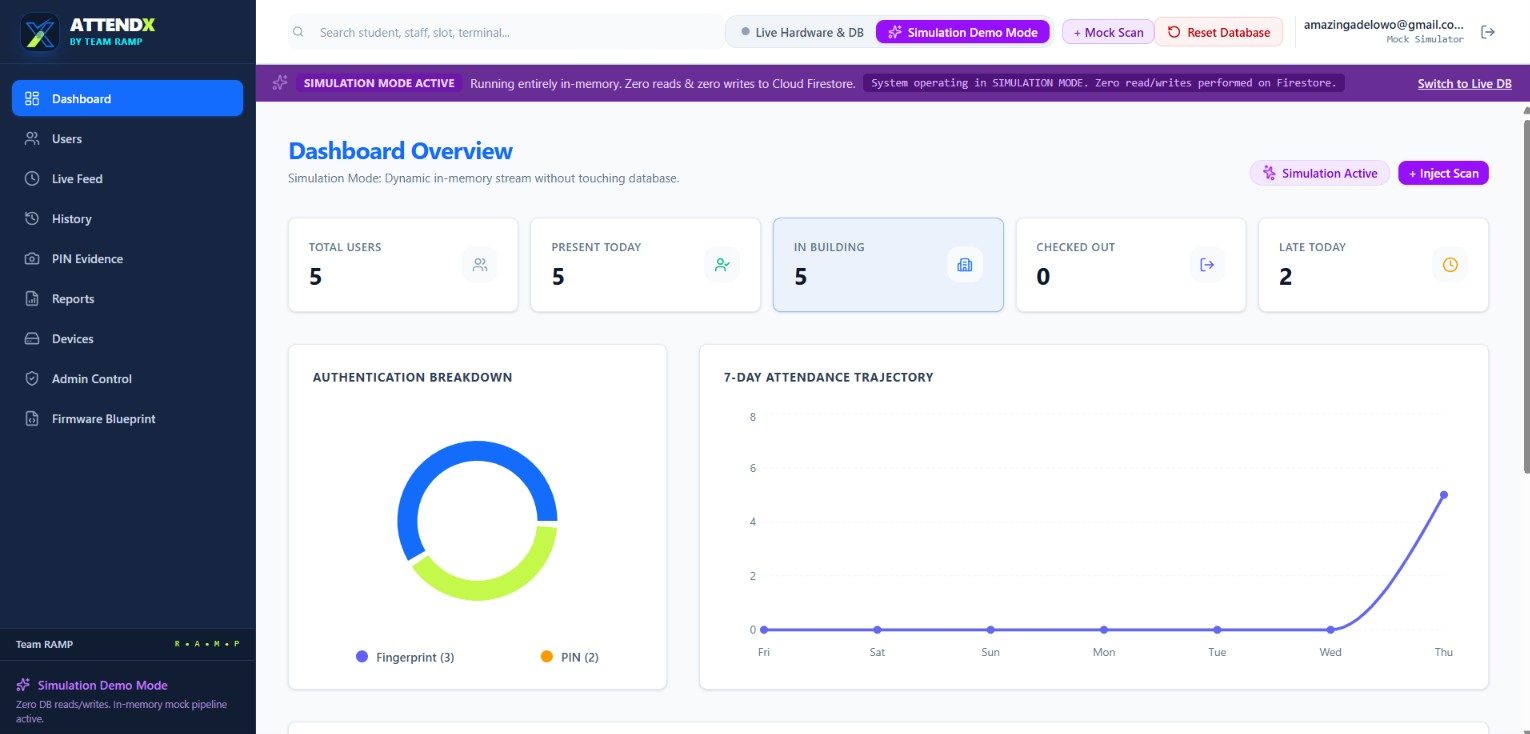
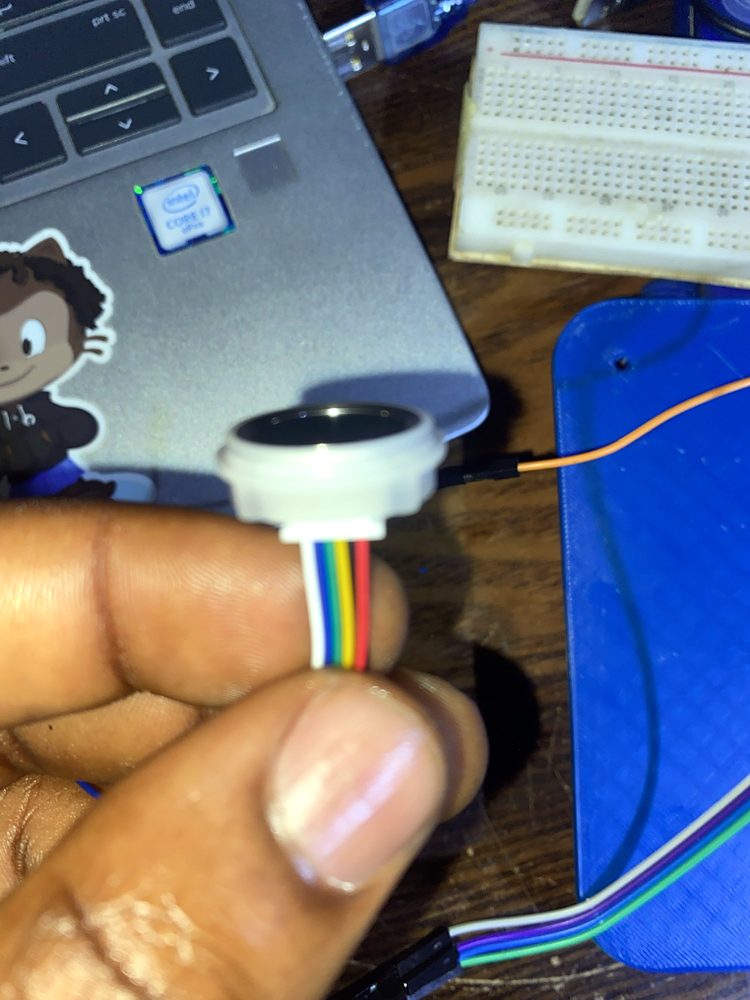
The fingerprint modules arrived late, two days before the grand finale. There was no version of the demo without them, so the last two days became a bring-up sprint: get an unfamiliar sensor talking on an unfamiliar board, on deadline.
- UART first. Wiring, voltage levels and baud verified point to point with a multimeter and logic probing before any library was trusted; the module speaks a specific UART protocol and every symptom, from silence to garbage bytes, traced back to levels or wiring.
- Then power. The sensor's current draw on a shared rail showed brownout-shaped behaviour during capture; separating the supply path settled it.
- Result: a working physical demo on finale day: fingerprint clock-ins, PIN fallback with snapshot, the full loop on the enclosed terminal.
1st place
Overall, NASCOMSOFT EMBEDED Hackathon 2.0 grand winner
4
Person team; product management and hardware engineering
2 days
From late sensor delivery to working demo
1
Design decision that closed the system's own hole
TEAM RAMP took 1st place overall at the NASCOMSOFT EMBEDED Hackathon 2.0 grand finale. For me this project is the smallest complete example of how I like to work: treat the hardware as part of the product, wire it so failures are visible, and take the system's design hole as seriously as its feature list.




— end of case study —